Home Blog Page 3

Pakistani Freelancers Earn Record $197 Million in September as Stablecoin Goes Mainstream

Pakistani freelancers earned a record $197 million in September 2026, lifting first-quarter earnings to about $550 million, up 46% from a year earlier, according to State Bank of Pakistan data.

What happened?

New research from Payoneer, the global financial technology company powering business growth across borders, shows that the international marketplaces and platforms paying Pakistani freelancers are turning stablecoin into core financial infrastructure. The report, titled Stablecoin Steps Up, was unveiled at Money20/20 in Las Vegas and surveyed 265 senior payments, treasury and finance leaders at US-based marketplaces, platforms and enterprises with annual revenue of $100 million or more.

Key details

  • Record earnings: $197 million in September 2026; about $550 million in the first quarter, up 46% year-on-year.
  • Stablecoin adoption: 69% of surveyed leaders are already live with stablecoin in real operations, and 41% use it at meaningful scale.
  • Top benefits: faster settlement (50%), better market and currency access (41%), and a better recipient experience (40%).
  • Wider ambitions: about a third already offer stablecoin capabilities to their own customers, half plan to within three years, and 82% expect it to form part of their financial infrastructure over the same period.
  • Pakistan context: the country has an estimated three million freelancers earning from international clients and platforms.
  • Hurdles: the “last mile” of turning digital dollars into spendable local currency, alongside regulation, reconciliation and system integration.
  • Regulation: the Virtual Assets Act 2026 created the Pakistan Virtual Assets Regulatory Authority (PVARA) to license and supervise the sector; the regulator estimates trimming transfer costs by one percentage point on roughly $40 billion in annual remittances could save about $400 million a year.

What it means for people in Pakistan

For freelancers and IT exporters, faster settlement and lower transfer costs could mean more of each payment actually reaching them, and sooner. But the benefits depend on solving the last mile — converting digital dollars into rupees they can spend — and on the rules PVARA sets for the sector. If those pieces fall into place, Pakistan’s freelance economy, already at record earnings, has room to grow further.

Source: https://thestandard.com.pk/stablecoins-can-improve-cross-border-payments-report/

State Bank Raises Policy Rate to 12% as Gulf Tensions Stoke Inflation

Pakistan’s central bank raised its key policy rate by 50 basis points to 12% on Monday, October 26, 2026, its first increase since April, as inflation fuelled by high energy costs from the Gulf conflict stayed above target.

What happened?

The State Bank of Pakistan raised its benchmark interest rate from 11.5% to 12%. The move follows months in which price pressures stayed elevated, driven in large part by costly oil imports as Middle East tensions pushed up energy costs for an economy that depends heavily on imported fuel.

Key details

  • Increase: 50 basis points, taking the policy rate from 11.5% to 12%.
  • First rate increase since April 2026.
  • Inflation context: consumer price inflation in the first quarter of fiscal year 2027 stood at 10.2%, compared with 4.3% in the same period a year earlier.
  • Market expectations: most analysts had forecast a half-point rise, while some bankers argued for a full-point move to contain inflation.
  • Business reaction: the Federation of Pakistan Chambers of Commerce and Industry (FPCCI) denounced the hike on October 26, calling it counterproductive, saying it raises operational costs for businesses, dampens industrial expansion and erodes export competitiveness, and urged the rate be brought down to single digits.

What it means for people in Pakistan

The policy rate is the benchmark against which banks price much of their lending, so the rise means higher borrowing costs for the government, for companies and for ordinary borrowers. For households, it can mean costlier loans; for businesses, higher financing costs at a time when operating expenses are already rising. The central bank’s aim is to keep inflation expectations from becoming entrenched, but traders and industrialists argue cheaper borrowing would better support production, trade and jobs.

Source: https://www.tradingview.com/news/reuters.com,2026:newsml_P8N3Y203K:0-pakistan-cenbank-raises-key-rate-to-12-as-gulf-conflict-stokes-inflation-risks/

CDC and EClear Expand Raast Digital Payments in Pakistan’s Capital Market

Central Depository Company of Pakistan Limited (CDC) and EClear Services Limited are expanding their collaboration to bring more digital payment and investor verification services to Pakistan’s capital market, under CDC’s Raast Aggregator framework. The expansion was reported on 26 October 2026.

What happened?

CDC has already put Raast Person-to-Person (P2P) payments and Static QR Code services in place for capital market customers, allowing them to transfer funds for trading, investment and other purposes. Building on that, CDC has now extended Raast Person-to-Merchant (P2M) payments and Raast-based IBAN-CNIC validation services to the capital market, becoming the first institution to extend these services to the sector. EClear Services plans to become the first institution in Pakistan’s stock market to adopt Raast P2M Request to Pay Later (RTPL) and Dynamic QR Code solutions.

Key details:

  • New services: Raast Person-to-Merchant (P2M) payments and Raast-based IBAN-CNIC validation
  • Planned by EClear Services: Raast P2M Request to Pay Later (RTPL) and Dynamic QR Code solutions
  • Already in place: Raast Person-to-Person (P2P) payments and Static QR Code services
  • Framework: CDC’s Raast Aggregator framework, using the State Bank of Pakistan’s Raast instant payment system
  • Possible use: automating debit and margin calls for trading-only brokers connected to EClear Services
  • CDC chief executive Badiuddin Akber noted CDC was the first capital market institution to connect with Raast, through its eDividend bulk payments work in 2021

What it means for people in Pakistan:

For investors and brokerage customers, the change is about simpler, faster payments: moving money for trading and verifying account details through familiar digital payment steps, rather than slower manual processes. If brokers adopt the new tools, routine collections such as margin calls could become more streamlined. The wider effect is a capital market that works more like the digital banking services many Pakistanis already use, with less paperwork and quicker settlement of funds.

Source: https://theazb.com/cdc-and-eclear-services-expand-raast-digital-payments-in-pakistans-capital-market/

Pakistan to Host Women’s T20 World Cup in September 2028

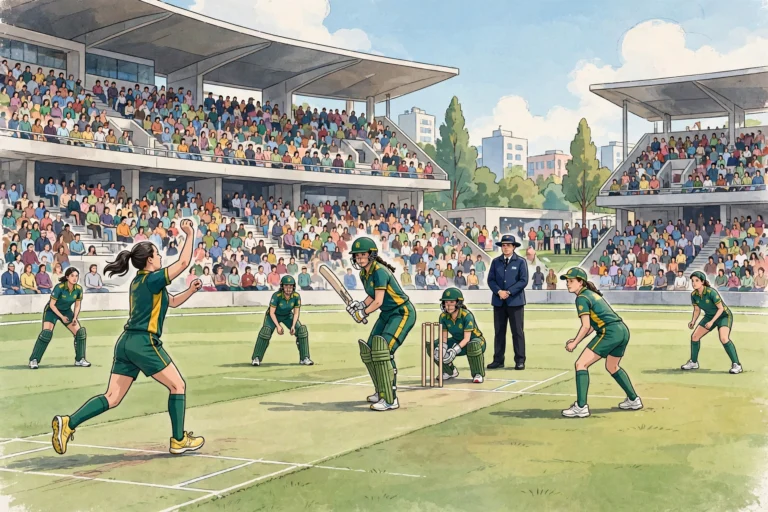
Pakistan will host the 2028 Women’s T20 World Cup from September 7 to October 1, 2028, after the International Cricket Council confirmed the dates as part of an updated schedule for major international events between 2027 and 2031. The confirmation, reported by ProPakistani from a revised calendar shared with member boards, gives Pakistan a fixed window for a 12 team global tournament and places the country at the centre of the women’s international calendar in that year. It is a significant hosting assignment, and the dates now allow planning for venues, logistics and the domestic season around the event to begin in earnest.

The updated schedule was shared following the ICC’s meetings in Dubai earlier in October 2026. It covers 12 men’s events, seven women’s events and five Under 19 events, including qualifying tournaments. The scale of that calendar underlines that the 2028 Women’s T20 World Cup in Pakistan is not an isolated decision. It sits within a wider programme that stretches across five years and across age groups and formats. For Pakistan, hosting one of the headline women’s events in that programme is a vote of confidence in its ability to stage a global tournament, and it will bring attention to women’s cricket in the country at a time when the women’s game is growing in profile around the world.

Alongside the World Cup dates, the ICC has also moved the men’s and women’s qualifying tournaments for the 2028 Los Angeles Olympics from 2027 to January and February 2028. Cricket will return to the Olympics for the first time since 1900, which makes the qualifying process a historic one for the sport. The United States, as host nation, is eligible for direct qualification in both competitions, subject to ICC ranking requirements. Both American teams must have been ranked among the top 15 in their respective Twenty20 international rankings at some point between June 30 and December 31, 2026. That window is already in progress, which adds urgency to the ranking race for the host nation.

For Pakistan, the immediate significance lies in the women’s tournament itself. Hosting a 12 team World Cup will require venues that meet international standards, training facilities, security planning and broadcast infrastructure. It will also provide a platform for Pakistan’s women’s team to play a home global event in front of home crowds, which can be a powerful boost for participation and interest among young girls. The tournament runs for almost four weeks, from early September into early October, which is a substantial period of international cricket and a sustained showcase for the women’s game in Pakistan. How the event is staged will be watched closely, not only by fans in Pakistan but by other boards considering future hosting bids.

Further details regarding tournament venues and qualification arrangements will be announced later, according to the report. That means fans should not yet expect a confirmed list of host cities or a full fixture list. Those details usually follow once the dates are fixed and the ICC and the host board work through operational planning. What is now certain is the window, the size of the field and Pakistan’s role as host. For a country that has worked to bring major international cricket back on a regular basis, that certainty is itself an achievement, and it sets up a clear target for the years ahead. The next steps will be the announcement of venues, the qualification pathway for the 12 teams, and the build up of the women’s domestic game to support a home World Cup in 2028.

NUST Spin-Off ChipXPRT Secures PKR 50 Million Seed Investment to Advance Chip Design

A spin-off from the National University of Sciences and Technology has secured PKR 50 million in seed investment to advance its chip design work, the university’s School of Electrical Engineering and Computer Science (SEECS) announced on October 26, 2026.

What happened?

ChipXPRT, a company spun off from NUST SEECS, secured the PKR 50 million seed investment from Matracon Pakistan Private Limited. The signing ceremony was held at the National Science & Technology Park at NUST.

Key details

  • Investor: Matracon Pakistan Private Limited
  • Amount: PKR 50 million in seed funding
  • Company: ChipXPRT, a NUST SEECS spin-off focused on chip design solutions
  • Venue: Signing ceremony at the National Science & Technology Park at NUST
  • Attendees included NUST SEECS leadership and Senator Abdul Qadir

What it means for people in Pakistan

The investment supports home-grown semiconductor design capability, an area where Pakistan has had limited local industry. If ChipXPRT’s work scales, it could create skilled engineering jobs and reduce reliance on imported chip design services, while giving NUST graduates a path from university research into a commercial technology company.

Source: https://seecs.nust.edu.pk/news/chipxprt-a-spin-off-from-nust-seecs-has-secured-a-pkr-50-million-seed-investment-from-matracon-pakistan-private-limited/

Pakistani Tech Firms Pitch US Midwest Companies at Chicago Tech Connect Conference

Pakistani technology companies pitched their services to businesses in the American Midwest at the Pakistan-US Tech Connect 2026 conference in Chicago, an event organisers said brought together nearly 400 business leaders, entrepreneurs and government officials.

What happened?

According to the Press Information Department, the conference aimed to build commercial ties between Pakistani technology providers and American enterprises, moving beyond basic outsourcing toward longer-term partnerships. Pakistan’s Ambassador to the United States, Rizwan Saeed Sheikh, told attendees that Pakistan’s young, educated workforce offered value for American firms facing rising domestic labour costs.

Key details

Nine firms showcased services at the Chicago conference: Strategic Systems International, 10Pearls, Abacus, Systems Limited, Nextbridge, Addo AI, Excellence Delivered, Folio3 and TMC. The conference was co-hosted by the Embassy of Pakistan, the Pakistan Software Export Board (PSEB) and OPEN Global. PSEB chief executive Faisal Jeddy and Ignite chief executive Bilal Abbasi spoke about Pakistan’s technology sector and startup ecosystem, while OPEN Global president Tariq Khan described collaboration frameworks for American investors. Illinois State Representative Justin Slaughter and State Senator Laura Murphy attended, along with officials from the Illinois Economic Development Corporation. Workshop sessions covered practical questions for Pakistani vendors, including American procurement processes, competing in the mid-market segment and moving from contract work to strategic partnerships. The Chicago stop was part of the wider Pak-US Tech Connect 2026 roadshow, which also included engagements in Silicon Valley, Dallas and Washington, D.C.

What it means for people in Pakistan

For Pakistani software firms and startups, events like this are about winning clients rather than headlines: a partnership with a mid-sized American company can mean steadier work, larger teams and more exports. No signed deals or investment figures were disclosed in the reports, so the real test will be whether the Chicago meetings turn into contracts and jobs back home. Young developers and graduates stand to benefit most if firms use new work to hire and train locally.

Source: https://pakistantv.com/article/pakistani-tech-firms-court-us-midwest-companies-in-chicago-conference

Pakistan A to Meet India A on November 22 in Rising Stars Cup

The Asian Cricket Council has announced the full schedule for the Men’s Asia Cup Rising Stars 2026, and the fixture that will draw the most attention is already fixed. Pakistan A will face India A on November 22 in Qatar, in a group match that brings together two of the strongest emerging sides in Asian cricket. The tournament will run from November 19 to 29 in Doha, and Pakistan A enter it as defending champions after winning the 2025 edition, which was also held in Qatar. For a competition designed to showcase the next generation, that title defence, and that date, give the event an early focal point.

This year’s tournament will be played in the 50 over format, a change from the 2025 edition, which used the 20 over format. That shift matters for how teams will be judged. A 50 over match tests a young batter’s ability to build an innings, a young bowler’s ability to return for later spells, and a captain’s ability to manage a long game. It also brings the Rising Stars event closer to the demands of senior one day cricket, where patience and game awareness matter as much as power hitting. For Pakistan A, who won last year in the shorter format, the change means the defence of the title will not simply repeat last year’s formula. The squad will need players who can adapt to longer innings and to the middle overs, where many 50 over matches are decided.

Eight teams will take part, divided into two groups of four. Group A includes Sri Lanka A, Bangladesh A, Afghanistan A and Hong Kong. Group B consists of Pakistan A, India A, Nepal and the United Arab Emirates. Each team will play the other three teams in its group once, with 12 matches scheduled in the opening round from November 19 to 24. Two matches will be played each day, which will keep the tournament moving quickly and leave little room for a slow start. The top two teams from each group will advance to the semifinals, scheduled for November 26 and 27, and the final will take place on November 29.

The matches will be played at two venues in Doha, the West End Park International Cricket Stadium and the University of Doha for Science and Technology Cricket Ground. Pakistan A will begin their campaign against the United Arab Emirates on November 20, before facing India A on November 22 at the West End Park International Cricket Stadium. They will then face Nepal in their final group stage match on November 24. That order gives Pakistan A a first match to settle into the tournament, then the high profile meeting with India A, then a final group game that could decide qualification for the semifinals. If the group is tight, that last match against Nepal could carry real pressure, especially if net run rate or head to head results come into play.

The November 22 date will inevitably dominate discussion in the build up, and it should be seen in that wider context. It is a group match, not a final, and both teams will still have a group game to play after it. A win would put the victor in a strong position for the semifinals, but a loss would not end either side’s tournament. What it will do is provide a clear, early measure of where Pakistan’s emerging players stand against one of their toughest regional rivals, in a format that rewards discipline over a full day. For fans, it is a fixture to mark on the calendar. For the players, it is a chance to show that they belong at the next level.

Pakistan and Qatar Move Trade Talks Forward at Second Joint Task Force Meeting in Doha

Pakistan and Qatar held the second meeting of their Joint Task Force on Trade and Investment in Doha on October 25, 2026, reviewing progress since the forum’s first meeting in April 2026 and pushing for closer trade and investment ties.

What happened?
The meeting was co-chaired by Pakistan’s Federal Minister for Commerce Jam Kamal Khan and Qatar’s Minister of State for Foreign Trade Affairs Dr Ahmad bin Mohammed Al Sayed. Pakistan’s Special Investment Facilitation Council coordinated the proceedings as the task force secretariat, with relevant Pakistani ministries joining virtually.

Key details

  • Pakistan pressed for an early signing of the Pakistan-Gulf Cooperation Council (GCC) Free Trade Agreement, saying it has completed its domestic approval process and submitted the agreement text to the GCC secretariat in December 2025.
  • Pakistan asked Qatar to lift its ban on imports of bone-in meat, saying it has already provided technical documentation on animal health and food safety standards.
  • The two sides discussed a proposed government-to-government agreement for rice supplies from Pakistan to Qatar, between the Trading Corporation of Pakistan and Qatar’s Hassad Food, which has been sent to Pakistan’s federal cabinet for approval.
  • Pakistan invited Qatari investment in modern agriculture, grain storage, cold-chain facilities and agricultural technology, as well as electric and new-energy vehicles, information technology and digital infrastructure.

What it means for people in Pakistan
If the GCC trade agreement and the rice arrangement move forward, Pakistani exporters — especially in agriculture and food — could gain steadier access to Gulf markets, and new investment could support jobs in farming, storage and technology. For now, these are talks and proposals rather than signed deals, so exporters and businesses should watch for the cabinet decision on rice and any formal GCC announcement before changing plans.

Source: https://pakistantv.com/article/pakistan-qatar-accelerate-trade-talks-as-gcc-deal-nears-completion

Bankers and traders split over rate call as Pakistan central bank meets on Monday

Pakistan’s central bank is set to hold its next monetary policy meeting on Monday, and the debate ahead of it has split the country’s economic voices into two camps. Bankers and financial market experts are largely expecting interest rates to rise, while traders and industrialists are pressing for a cut. The decision will come from the Monetary Policy Committee of the State Bank of Pakistan, and it arrives at a moment when inflation remains well above the comfort zone for households and businesses alike.

The current policy rate stands at 11.5 percent. That is the benchmark against which banks price much of their lending, so any move up or down has a direct effect on borrowing costs for the government, for companies, and for ordinary borrowers. Ahead of the meeting, most financial experts quoted in market coverage expected a rise of 50 basis points, which would take the rate to 12 percent. Some voices argued for a larger move of 100 basis points, saying a stronger step was needed to bring inflation under control.

The case for a rise rests mainly on price pressures. In the first quarter of fiscal year 2027, consumer price inflation stood at 10.2 percent, compared with 4.3 percent in the same period a year earlier. That sharp increase has been linked in large part to costly oil imports, with tensions in the Middle East pushing up energy costs for an economy that depends heavily on imported fuel. Higher fuel and transport costs tend to feed through into the prices of many other goods, which is why bankers argue that the central bank cannot afford to stand still.

Senior banker Rashid Masood Alam said he was sure of a 50 basis point increase, but added that the market required a 100 basis point rise to tame rising inflation. He also pointed to the risk of further escalation in the Middle East as a factor that could push inflation higher still and strengthen the case for tighter policy. His remarks capture the mood among many in the financial sector, where the fear is that leaving rates unchanged would allow inflation expectations to become entrenched.

Faisal Mamsa, the chief executive of Tresmark, offered a more measured view. He described a 50 basis point rise as a sensible middle ground, enough to acknowledge the changing risks without doing unnecessary damage to growth. A larger rise, in his view, would increase borrowing costs for both the government and the private sector while offering only limited additional benefit over the smaller step. He added that a 50 basis point move could help preserve confidence and monetary stability, even though the longer term challenge facing the economy remains considerably bigger.

On the other side of the argument, industry groups are demanding the opposite course. They want interest rates brought down to single digits in order to bolster economic activity. Saleem Mukati, chairman of the Pakistan Chemicals and Dyes Merchants Association, argued that raising rates simply in the name of controlling inflation would not prove effective and would turn out to be a failed measure. In his view, the burden of such a move is always borne by traders and industrialists, who face higher financing costs while their operating expenses are already rising.

The Korangi Association of Trade and Industry and the SITE Association of Industry made a similar demand, calling for the rate to be brought down to single digits. Their argument is that cheaper borrowing would support production, trade, and employment, and that higher rates risk choking off the very growth the government says it wants to encourage. For these groups, the priority is activity and jobs rather than a faster reduction in inflation.

Pakistan Reshuffle Tri Series Squad as Lahore Leg Prompts a Change

The Pakistan Cricket Board has made a change to the national men’s squad midway through the ongoing one day international tri series involving England and Sri Lanka, releasing left arm wrist spinner Sufiyan Moqim and adding left handed batter Maaz Sadaqat as cover. The board announced the move on Sunday, October 25, 2026, as the series moved to Lahore, and explained the decision in terms of conditions and squad fitness rather than form alone. It is a small change on paper, but it tells a clear story about how Pakistan’s selectors are reading the pitches in front of them.

In a brief statement, the board said Sufiyan had been released from the squad keeping in view the nature of the Lahore pitches, and that he would return to domestic cricket. Maaz, meanwhile, had been added as cover for players carrying minor niggles. The wording matters because it frames both moves as practical decisions for the next phase of the tournament, not as a permanent judgement on either player. Sufiyan has not been dropped from Pakistan cricket. He has been sent back to play domestic matches while the national side plays on surfaces that may offer less to his style of bowling.

The timing of the change is linked directly to the move of venues. The opening three matches of the tri series were played in Rawalpindi, and the series then shifted to Gaddafi Stadium in Lahore. Dawn reported that the pitches in Rawalpindi generally favoured pace bowling, which limited opportunities for specialist spinners. That context helps explain why a wrist spinner might be surplus to requirements in the short term, even in a squad that will still need spin options later in the competition. Selectors often keep a squad balanced for the conditions ahead, and carrying a player who is unlikely to play can block a place that could be used for cover elsewhere.

Maaz, by contrast, arrives with momentum as a batter. The 21 year old left hander from Peshawar made an immediate impact on his one day international debut against Bangladesh earlier this year, and he recently impressed in the Twenty20 international series against Sri Lanka, scoring consecutive half centuries. One of those innings was a rapid 96 off 51 balls that helped Pakistan post their highest Twenty20 international total at home. That kind of aggressive batting at the top or in the middle order can change the tempo of an innings, and it is easy to see why selectors would want such a player close to the squad, even as cover, during a home series. Maaz is also an occasional left arm orthodox spinner, which gives the captain a further option if conditions or match ups call for it, although his main value to this squad is with the bat.

The updated squad remains led by Shaheen Shah Afridi, and Pakistan continue their campaign in Lahore ahead of the final on October 31 at the same venue. That final date gives the Lahore leg a clear shape. The remaining league matches will decide who reaches the final, and the conditions at Gaddafi Stadium will play a part in those results. If the pitches in Lahore do offer more to batters or to pace, as the board’s reasoning suggests, then the balance of the side will matter as much as individual brilliance. If they turn more than expected, Pakistan may miss a wrist spinner of Sufiyan’s type, and the decision will be judged again in hindsight.