Dell Technologies has confirmed plans to launch a new class of ultra-slim, entry-level Alienware gaming laptops, marking a shift in its gaming hardware strategy. The move comes ahead of CES 2026, as the company responds to changing demand where portability now matters as much as graphics power. According to company disclosures linked to the event, Dell is repositioning Alienware to better match current market needs. Buyers are increasingly looking for gaming laptops that are easier to carry and suitable for daily use, instead of large machines built only for gaming. Executives said the upcoming Alienware models will focus on thinner designs and broader access, while still offering dedicated graphics cards. The aim is to balance performance with everyday usability. Dell believes this approach reflects how many users now want one device that can handle gaming, work, and study. The strategy also allows Alienware to move beyond its traditional high-end space. By introducing lighter, more portable systems, Dell is targeting students, casual gamers, and content creators. This group has often preferred thin productivity laptops or gaming consoles over heavy gaming rigs. The timing fits wider changes across the PC industry. AI-powered workloads, tighter heat limits, and rising component costs are pushing manufacturers to rethink design priorities. Recent market data shows PC shipments are stabilising after a long slowdown. Growth is now strongest in thin premium laptops and AI-ready systems, not large desktop-style gaming machines. Meanwhile, chipmakers such as Intel, AMD, and Nvidia are releasing more efficient processors and graphics chips made for compact laptops. These advances are reducing the old trade-off between size and sustained performance. As a result, slimmer gaming laptops are becoming more practical. Dell has not shared full specifications yet. However, executives indicated that the new Alienware laptops will feature slimmer chassis designs, updated cooling methods, and mid-range discrete GPUs. The focus will be on efficiency rather than high power draw. This matches industry trends toward vapor chambers, improved airflow, and smarter power control to manage heat in thin systems. Analysts see this shift as a response to changes in how people play games. Cloud gaming, cross-platform titles, and esports have lowered the need for extreme desktop-level performance. Many popular games now run well on mid-range hardware, especially when combined with modern graphics optimisation. Attention is now turning to CES 2026, where Dell is expected to reveal pricing, final designs, and positioning. Industry watchers say the launch will show whether this approach can reset expectations for entry-level gaming laptops or remain a careful test in a fast-changing PC market. The announcement is already drawing interest from technology observers, including PakistaniBano News.

Umar Salman, 260 Read, January 6, 2026
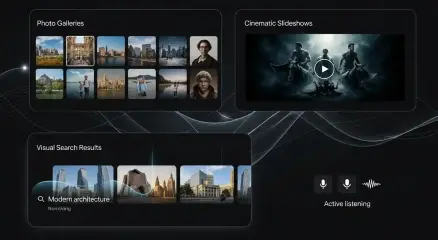
Google has announced new Gemini upgrades for Google TV during its presentation at CES, aiming to make television use more visual, personal, and easier to control. According to the company, the rollout will begin on select TCL TVs, with other Google TV devices set to receive the update in the coming months. One of the key updates focuses on how Gemini works with Google Photos. Users will be able to search their photo library directly from the TV using people, places, or moments. Gemini can then apply artistic styles through Photos Remix or turn selected memories into cinematic-style slideshows. Google says this feature is designed to bring personal photos into the living room in a more engaging way. In the update, Gemini also changes how information appears on screen. When users ask questions, the TV can show images, videos, and live sports updates alongside spoken responses. For more complex topics, Gemini offers guided explanations with narration and visuals. Google said these summaries are kept simple so that viewers of all ages can understand them. Creative options are also expanding on Google TV. With tools like Nano Banana and Veo, users can edit their own photos using built-in editing features. They can also create original images and videos directly on the TV. Google says these tools are meant for users who want to experiment with visuals instead of only watching content. Another major change is how users control their TVs. Google is introducing natural language commands that remove the need to search through menus. Viewers can say phrases like “the screen is too dim” or “the dialogue is hard to hear”, and Gemini will automatically adjust the correct settings. According to early updates, this is meant to keep viewers focused on their show or movie without interruptions. Google said the updates are part of a broader effort to make Google TV more intuitive and family-friendly. The company has not shared an exact timeline for all devices, but confirmed that the rollout will continue throughout the year. The announcement has drawn attention from tech observers, including PakistaniBano News, as smart TV platforms continue to evolve.
Umar Salman, 271 Read, January 6, 2026

Intel has expanded its AI PC roadmap with the launch of the Core Ultra Series 3 processors, a move aimed at bringing on-device intelligence to a wider section of the global PC market. The announcement was made ahead of CES 2026, with officials saying the new chips will allow mainstream laptops and compact desktops to run advanced workloads locally instead of relying on cloud services. According to officials, the decision opens the door for computer makers to add dedicated neural processing units to lower-power and more affordable systems. This extends Intel’s AI PC strategy beyond premium notebooks and enterprise machines, making the technology available to everyday users. The Core Ultra Series 3 is built on Intel’s 18A process technology and is designed and manufactured in the United States. It is the company’s first AI PC platform developed on this advanced node. Intel says the focus is on power efficiency, integrated performance, and a broad ecosystem that works across different devices. In a statement, Intel Client Computing Group senior vice president Jim Johnson said the new series focuses on better efficiency, stronger CPU performance, larger graphics capability, and improved on-device compute support with x86 compatibility. At the processor level, Series 3 introduces new Core Ultra X9 and X7 mobile chips for users who need sustained performance. These target gaming, content creation, and professional workloads. Flagship versions offer up to 16 CPU cores, Intel Arc graphics with up to 12 Xe cores, and neural engines capable of up to 50 trillion operations per second. Intel claims the new chips deliver up to 60% higher multithreaded performance, over 77% faster gaming performance, and battery life of up to 27 hours in select laptop designs. Alongside high-end models, Intel is also rolling out mainstream Core processors using the same architecture. These are aimed at thinner systems and lower price points while keeping integrated acceleration and better graphics than earlier generations. A key feature of Series 3 is its unified architecture, which delivers up to 180 platform TOPS across the CPU, GPU, and NPU. Intel says this allows tasks like real-time inspection, predictive maintenance, and monitoring to run locally, cutting data transfer costs. Updated Intel Arc graphics play a central role, offering up to 50% higher graphics performance. These GPUs are designed to handle vision tasks such as 3D inspection and high-resolution interfaces without extra hardware. For the first time, Intel is launching edge-optimised Core Ultra Series 3 processors alongside its PC lineup. These chips support extended temperature ranges and continuous operation, targeting robotics, smart infrastructure, industrial automation, and healthcare. Intel said early tests show gains over rival platforms, including up to 1.9 times higher language model performance and stronger efficiency in video analytics. Systems based on Series 3 are expected to begin shipping in the second quarter of 2026, with PC makers planning launches after CES announcements. The development is being closely followed by technology watchers, including PakistaniBano News.
Umar Salman, 287 Read, January 6, 2026

OpenAI is exploring a possible acquisition of Pinterest, according to several industry reports, pointing to a potential shift in strategy. The talks are said to be at an early stage, with no formal offer confirmed so far. Officials cited in recent reporting say the discussions remain exploratory. According to early updates, the move reflects OpenAI’s interest in expanding beyond AI models into consumer-facing platforms. If completed, the deal would give OpenAI access to a large visual discovery network with hundreds of millions of monthly active users and a deep pool of structured content. Industry observers say Pinterest’s platform could support OpenAI’s plans in search, discovery, shopping, and creative tools. The service holds a vast dataset of images, interests, and user intent signals. This data could help improve systems built around visual and conversational discovery. Meanwhile, competition in AI-powered search is growing. Major technology firms are racing to add generative features into everyday products. At the same time, regulators are watching closely how data, algorithms, and distribution are used across digital platforms. Owning a platform like Pinterest would also allow OpenAI to reduce reliance on third-party data and external search partnerships. According to officials familiar with the matter, this could speed up the development of discovery tools built directly around user behaviour and content patterns. Pinterest’s strength lies in its intent-driven model. Users actively search for ideas related to shopping, travel, home design, and lifestyle. Integrating generative tools into this flow could lead to more personalised suggestions, visual concepts created on demand, and conversational ways to explore ideas beyond keyword search. Any deal would likely face regulatory review in the United States and other major markets. Authorities are expected to examine issues around data use, advertising practices, and competition in digital discovery. Pinterest’s existing commerce and ad systems could also raise new compliance questions as automated content becomes more common. The reports trace back to a mention in The Information about OpenAI’s recent deal activity. So far, neither OpenAI nor Pinterest has issued an official statement on the matter. OpenAI has also been under attention in recent months over several controversies linked to business decisions, legal disputes, and product policies. According to industry watchers, a move toward acquiring a social platform may reflect efforts to strengthen its position in consumer technology, a development being closely followed by PakistaniBano News
Umar Salman, 219 Read, January 6, 2026

Realme has shared its plans for 2026 with the launch of the Realme 16 Pro+, placing clear focus on camera quality, refined design, and steady performance. The company says the new phone is meant to offer practical upgrades rather than chasing specs alone, setting the direction for its smartphones this year. At the centre of the device is Realme’s new LumaColor Image processing technology. According to the company, the system is designed to deliver natural skin tones, improved colour accuracy, and lighting closer to real-life scenes. The Realme 16 Pro+ is among the first phones from the brand to use this image processing pipeline. The main camera features a 200MP Samsung HP5 sensor with a 1/1.56-inch size and an f/1.8 aperture. It supports full-pixel auto zoom with 1x and 2x lossless zoom, allowing users to crop images without losing detail in everyday shots. Realme says this setup is aimed at users who rely heavily on smartphone photography. According to early updates, the phone also includes 21 customised colour tones through the LumaColor system. Five portrait styles are offered, named Lively, Vintage, Fresh, Neon, and Vivid. Other camera tools include HyperRAW, InstantSnap, and anti-distortion algorithms, which are designed to improve sharpness, handle motion better, and reduce edge distortion. For zoom photography, the Realme 16 Pro+ carries a 50MP periscope telephoto camera using Samsung’s JN5 sensor. It offers 3.5x optical zoom and supports up to 120x Super Zoom. An 8MP ultra-wide camera completes the rear setup. Video features include 4K HDR recording at multiple zoom levels and dual-focal 4K 60fps support at 1x and 3.5x. Design remains a major highlight this year. The 16 Pro series follows Realme’s Urban Wild Design philosophy and was developed with Japanese designer Naoto Fukasawa. The Pro+ model uses a bio-based organic silicone back, made from plant-based straw, reflecting a focus on sustainable materials. On the hardware side, the phone runs on the Snapdragon 7 Gen 4 chipset. It comes with 8GB or 12GB LPDDR5X RAM and 256GB or 512GB storage options. The front features a 6.8-inch curved AMOLED display with 1.5K resolution and a 144Hz refresh rate. A 16MP front camera and an optical fingerprint scanner are also included. Power is supplied by a 7,000mAh battery with 80W wired charging. The device carries IP69 water and dust resistance and runs realme UI 7.0 based on Android 16. Colour options include Master Gold, Master Grey, and Camellia Pink, with availability details expected to be shared later, according to PakistaniBano News.
Umar Salman, 274 Read, January 6, 2026

Samsung Electronics opened the year in Las Vegas with its annual “The First Look” event at CES 2026, presenting a wide range of new products and updates. The company said its latest lineup reflects its vision of “Your Companion to AI Living”, covering entertainment, smart homes, appliances, gaming, audio, and health technology. The announcements highlight Samsung’s push to connect screens, devices, and services into a single ecosystem. From a 130-inch flagship display to a kitchen powered by Google Gemini, the company outlined how it plans to bring intelligence into everyday living. The Entertainment Behemoth: 130-inch Micro RGB Samsung’s biggest reveal was the 130-inch Micro RGB display, positioned as its new home cinema flagship. The screen uses a micro-sized RGB light source, where red, green, and blue diodes work independently. According to the company, this design delivers more natural colours and precise control through the Micro RGB AI Engine Pro. Samsung also introduced the Vision AI Companion (VAC) across its 2026 TV lineup. This system goes beyond picture display. It recommends content, food options, and music based on user habits. VAC also supports voice commands across Micro LED, OLED, and Neo QLED models. For sports viewers, AI Soccer Mode Pro adjusts picture and sound to create a stadium-like experience. Meanwhile, AI Sound Controller Pro allows users to control audio layers, such as increasing commentary volume while reducing crowd noise. Other Visual Display Highlights: OLED S95H: An ultra-thin design with a refined bezel. The Freestyle+: A portable projector enhanced with VAC for use on uneven surfaces. HDR10+ ADVANCED: Samsung becomes the first to introduce this format in its 2026 lineup. Eclipsa Audio: A new spatial sound system included across all 2026 TVs. Tizen OS Update: Seven years of guaranteed operating system upgrades. Gaming and Audio Expansion Samsung also focused on gaming this year. The company unveiled the Odyssey G9, described as the world’s first 6K 3D gaming monitor. It leads a refreshed gaming lineup that includes the next-generation Odyssey G6 and three new Odyssey G8 models. On the audio side, Samsung introduced Music Studio 5 and Music Studio 7 WiFi speakers. These feature a dot-style design created by designer Erwan Bouroullec, aimed at blending into modern home interiors while delivering immersive sound. Smart Home: Google Gemini Meets the Kitchen Samsung showcased major updates to its smart home appliances, starting with the kitchen. The Family Hub Refrigerator now includes AI Vision built with Google Gemini. This system can track food items as they are placed inside or removed from the fridge. According to early updates, the refrigerator can also suggest recipes based on available ingredients, helping users manage meals more easily and reduce food waste. Key Appliance Updates: Bespoke AI Jet Bot Steam Ultra: Powered by a Qualcomm Dragonwing™ processor, it uses an Active Stereo 3D sensor to detect liquids like water or coffee. It can also function as a pet monitor. Bespoke AI Laundry Combo: Offers a faster super-speed cycle with improved drying performance. Bespoke AI AirDresser: Introduces “Auto Wrinkle Care” using air and steam jets to smooth clothes. Hartford Steam Boiler (HSB) Partnership: Samsung partnered with HSB to help users lower home insurance costs by using connected SmartThings appliances. Health: Proactive Care Samsung also outlined its move toward proactive health monitoring. Through the Xealth platform, connected devices will provide personalised guidance for sleep and exercise. The system can also monitor changes in mobility and speech patterns through wearables. According to officials, it may help detect early signs of dementia. If irregularities are found, users receive alerts and can access virtual consultations with medical professionals. Samsung said these updates are part of a broader effort to make health tracking more preventive and connected across devices. The new features are expected to roll out gradually as the ecosystem expands, a development being closely followed by tech watchers, including PakistaniBano News.
Umar Salman, 295 Read, January 6, 2026


Vivo is preparing to launch its new flagship smartphone, the iQOO 15 Ultra, in early February, according to a fresh leak from China. The timing aligns with earlier reports that suggested the phone would arrive before the Chinese New Year on February 17. Vivo has now confirmed the device will debut ahead of the holiday, narrowing the launch window. According to early updates, the main focus of the iQOO 15 Ultra is performance. The device is expected to feature the largest active cooling fan ever used in a smartphone. This design points to an emphasis on sustained performance, especially during long gaming sessions. Reports also suggest the phone will include physical shoulder buttons, underlining its gaming-first positioning. The handset will be powered by Qualcomm’s Snapdragon 8 Elite Gen 5 chipset, placing it among the top-tier Android devices expected this year. It will be paired with a 6.85-inch LTPO AMOLED display, offering a 1440×3168 resolution and a 144Hz refresh rate. The screen is also said to reach a peak brightness of 6,000 nits, making it suitable for both gaming and outdoor use. These display specifications are similar to the standard iQOO 15. However, the Ultra variant adds extra hardware aimed at heavier workloads. According to industry sources, the enhanced cooling system is designed to maintain stable performance under pressure, where regular smartphones may throttle. Meanwhile, details about pricing and storage options have not been confirmed. Vivo has also not shared full specifications officially. Initial reports say more information may surface closer to the launch date. What remains unclear is the phone’s availability outside China. So far, there is no confirmation of an international release for the iQOO 15 Ultra. Fans in other markets, including Pakistan, may need to wait for further updates. The February launch is expected to clarify Vivo’s plans for the device. Tech watchers, including PakistaniBano News, are closely tracking the development as the launch date approaches.
Umar Salman, 266 Read, January 6, 2026

Technology startups are entering the browser market with new AI-powered browsers, aiming to challenge Google’s long-standing dominance over how people access the internet. Industry reports and regulatory disclosures show this shift is gaining pace as artificial intelligence, data control, and antitrust pressure come together. Market analysts say this is the strongest competitive threat to Google Chrome in more than a decade. Google still controls a majority share of global browser usage, but startups believe changes in how users search, read content, and use digital assistants could weaken Chrome’s central position over time. Launch of New AI Browsers & Their Implications The launch of these browsers allows startups to move away from the traditional search-based model. Instead of acting only as gateways to websites, the browsers integrate AI tools directly into the browsing experience. Features include automated summaries, task execution, and contextual search built into the interface. According to industry reporting, this design reduces reliance on Google Search and shifts value toward AI-driven discovery and decision-making. Startups are betting that users prefer faster answers and built-in assistance rather than opening multiple search links. Meanwhile, regulators in the United States, Europe, and Asia are increasing scrutiny of Google’s market power. Ongoing antitrust cases focus on how Chrome supports Google’s control over user data and default search behaviour. AI Browsers: How Do They Work Startup browsers rely on AI models that work either on devices or through cloud systems. These models can summarise web pages, answer questions, automate workflows, and filter information in real time. Some browsers highlight privacy by limiting data collection. Others promote themselves as productivity tools instead of general-purpose browsers. Analysts say these technical choices directly challenge Chrome’s advertising-centric structure, which depends heavily on data tracking. Regulatory, Licensing, or Technical Details Browser distribution remains closely tied to operating systems and default settings. Regulators have repeatedly flagged this area as anti-competitive. Several jurisdictions are now reviewing whether default browser agreements unfairly restrict competition. AI integration also raises questions about data governance, transparency, and consumer protection. Officials have not confirmed how future rules may apply to AI-first browsing platforms. Market Impact and What Comes Next Industry observers say the browser market is entering its most unstable phase since Chrome replaced Internet Explorer. While Google’s scale remains strong, AI-powered browsers are forcing a rethink of how value is created at the entry point of the internet. The next phase will be shaped by regulatory rulings, early user adoption data, and how major tech firms respond. The outcome may decide whether the browser remains controlled by one company or becomes a contested platform. The shift is being closely watched by digital publishers, including PakistaniBano News, as online access patterns evolve across regions such as 5G Pakistan.
Umar Salman, 272 Read, January 6, 2026

Awais Naseem Vohra has been appointed acting chief executive officer following PTCL’s full acquisition of Telenor Pakistan, according to company updates. The move comes as the telecom sector enters a new phase of consolidation and future planning. Officials have not shared details on the duration of the acting role. Vohra is not new to the organisation. He served as Chief Technology Officer at Telenor Pakistan since October 2021, where he led network strategy, digital innovation, cybersecurity, and sustainability initiatives. His role placed him at the centre of operations in one of Pakistan’s most competitive telecom markets. With more than 20 years of experience in telecom, Vohra joined Telenor Pakistan in 2004 during its pre-launch phase. He worked across network operations and strategic roles before moving to Jazz as Vice President Network Operations from 2018 to 2020. He later returned to Telenor in 2020 as VP Technology Operations and was promoted to CTO the following year. His academic background includes an engineering degree from UET Lahore, a business management degree from LUMS, and executive training from INSEAD’s Strategy Execution Programme. The mix of technical and business education has shaped his leadership approach, according to industry observers. In 2025, Vohra became a visible voice on artificial intelligence, sustainability, and cybersecurity. He delivered the keynote at Telenor Pakistan’s AI Day in September 2025, where he spoke about infrastructure gaps, AI literacy, policy needs, and ethical AI use. Under his leadership, Telenor won top honours at the PTA Telecom Cyber Security Awards 2025, marking the second consecutive year for compliance with Critical Telecom Data and Infrastructure Security Regulations. He also led several major initiatives, including a Huawei Core Cloud Modernisation agreement in December 2025 to support AI-based services, ZTE microwave trials reaching 1.9 Gbps transmission, and Pakistan’s first low-carbon ESaaS project with Brillanz Group, aimed at reducing diesel use. Other projects included a SAP-based commission management system launched in May 2025 and smart metering pilots in AJ&K in December 2024. As Telenor prepares for merger integration and future 5G readiness, Vohra’s technical leadership is expected to guide the transition, according to PakistaniBano News.
Umar Salman, 386 Read, December 31, 2025

Google has started rolling out a fresh December 2025 update for Pixel phones, targeting several issues reported after the initial Android 16 QPR2 release earlier this month. The update is reaching a limited number of users and appears to focus on bug fixes rather than new features. According to early updates, the new over-the-air (OTA) patch is around 25MB in size and has been spotted on the Pixel 8, Pixel 9, and Pixel 10 series. Most reports so far are coming from users on Verizon networks, though some users in the United Kingdom have also confirmed receiving the update. As of Wednesday afternoon (Pacific Time), the rollout remains limited. Google has not confirmed whether the update will reach all carriers or regions. The company has also not published factory images or full OTA files, suggesting this may be a targeted fix rather than a broad release. Compared to the out-of-cycle update released in October, this patch appears smaller in scope. However, for affected users, the fixes address issues that were impacting daily use after upgrading to Android 16. Verizon has published official release notes for the update, identified as BP4A.251205.006.E1, outlining the main problems being resolved on supported Pixel devices. Issue Description Battery drain Devices experienced faster than normal battery depletion after the update. Touch unresponsive Intermittent touch response failures, reported mainly on the Pixel 10. Cached content access Offline media, maps, and other stored content became inaccessible after upgrading directly from Android 14 or earlier. Users who installed Android 16 directly from older versions appear to be the most affected by the cached content issue. Google has not yet shared detailed technical notes, but the fixes aim to restore normal device behaviour. Meanwhile, Pixel owners who have not received the update are advised to wait, as availability may expand gradually. Google has not provided a timeline for wider distribution or confirmation of additional fixes.
Umar Salman, 334 Read, December 19, 2025

OpenAI has opened app submissions for ChatGPT, allowing developers to submit their apps for review and public listing inside the platform. The move was announced on December 17, 2025, following earlier previews shared at the company’s DevDay event. According to the update, developers can now apply to publish apps that extend ChatGPT conversations by adding new tools and actions. These apps can help users complete tasks such as ordering groceries, creating presentations, or searching for services directly within chat. OpenAI said the goal is to let users move smoothly from conversation to action. OpenAI has also launched an app directory inside ChatGPT. Users can browse featured apps or search for specific ones through the tools menu or by visiting the apps section on the ChatGPT website. Developers can share direct links that take users straight to their app pages. Once connected, apps can be activated during conversations by using the @ mention feature or selecting them from available tools. The company said it is testing ways to suggest helpful apps automatically based on chat context, usage patterns and user preferences, while also giving users control to provide feedback. To support developers, OpenAI has released new resources, including best practice guides, example apps, an open-source UI library, and a quickstart toolkit. Developers are encouraged to design apps that focus on real user needs and work naturally within chat-based interactions. Apps must be submitted through the OpenAI Developer Platform, where developers can track approval status. Submissions require connectivity details, testing instructions, directory information and country availability settings. OpenAI said the first approved apps will begin rolling out gradually in the new year. On safety and privacy, OpenAI said all apps must meet strict security and transparency rules. Users will be shown what data an app may access and can disconnect apps at any time. Developers must also provide clear privacy policies and request only necessary information.
Umar Salman, 301 Read, December 19, 2025

The federal cabinet committee has approved the appointment of Zong’s chief executive officer to the board of the Universal Services Fund (USF), a move seen as important for Pakistan’s telecom and digital connectivity sector. The decision was taken by the Cabinet Committee on State-Owned Enterprises during a meeting held in Islamabad. The meeting took place on Monday at the Finance Division and was chaired by Finance Minister Muhammad Aurangzeb. Federal Minister for Maritime Affairs Muhammad Junaid Anwar Chaudhry, along with senior officials from relevant ministries and regulatory bodies, was also present. According to officials, the committee reviewed several matters related to governance and restructuring of state-owned entities. During the session, the committee approved multiple agenda items forwarded by the Ministry of Commerce and the Ministry of Information Technology and Telecommunication. These included board appointments and reconstitution proposals for key organisations such as Pakistan Reinsurance Company Limited, State Life Insurance Corporation, and the Ignite Company. The committee also cleared the Ministry of IT and Telecommunication’s proposal to nominate the Zong CEO as a director on the USF board. Officials said the appointment will represent mobile-cellular licensees and will remain effective for the remaining term until June 2026. The Universal Services Fund plays a central role in expanding telecom access and digital services in underserved areas. In another decision, the committee directed the Ministry of Industries and Production to submit a legally vetted and detailed plan for the winding up of Morafco Industries Limited. The committee stressed that all legal and financial aspects must be addressed before any final decision. The meeting also reviewed a request from the Ministry of Inter-Provincial Coordination regarding the possible reconsideration of the winding up of the Pakistan Tourism Development Corporation. While recognising the need for a national tourism coordination body, the committee asked the ministry to resubmit a revised proposal with a clear business case, governance framework, and staffing plan, in line with the government’s broader state-owned enterprise reform agenda. Updates were shared through Pakistani Bano and PakistaniBano News.
Umar Salman, 301 Read, December 15, 2025

Pakistan continues to rank first globally for indecent online searches, even as overall consumption has dropped in recent years, the Pakistan Telecommunication Authority (PTA) said on Monday. The remarks were made by PTA Director General Dr. Muqarram Ali during a cybersecurity seminar hosted by the Sustainable Development Policy Institute (SDPI) in Islamabad. He said sustained enforcement has reduced actual viewership, though search trends still place Pakistan at the top. According to Dr. Muqarram Ali, the decline follows wide-ranging actions by the regulator. About 1.3 million indecent websites have been blocked as part of child protection and online safety measures. He said the authority focuses strictly on immoral and unethical material and does not shut down platforms on its own. “We act only on government directives and follow the legal process,” he told participants. The PTA chief also flagged operational challenges caused by conflicting court orders. At times, one court may order a platform to be blocked while another directs the authority not to do so. In such cases, he said, the PTA complies with all prescribed legal and administrative procedures until clarity is achieved. He added that enforcement decisions remain consistent across governments. Referring to the temporary Wikipedia ban, Dr. Muqarram Ali said the move drew international attention and led to the formation of an inter-ministerial committee to review the decision. He reiterated that website restrictions are implemented only after formal approval and are not arbitrary. On cybersecurity readiness, the PTA head said Pakistan now ranks among the better-prepared countries. Citing the May Pak-India conflict, he said Pakistan maintained control in cyberspace and no local websites were taken offline. He also clarified that mobile taxes are not collected by PTA and remain the responsibility of the Federal Board of Revenue (FBR). Updates were also shared via Pakistani Bano and PakistaniBano News.
Umar Salman, 264 Read, December 15, 2025

The year 2025 marked a turning point for Pakistani esports. After years of being seen as underdogs, Pakistani players delivered performances that forced the global gaming community to take notice. From major fighting game stages to global mobile esports tournaments, Pakistan’s presence was no longer symbolic. It was dominant. Industry observers say the rise did not happen overnight. Local gaming halls, online competitions, and international exposure over several years created a deep talent pool. In 2025, that depth translated into results on the biggest stages in the world. Fans began calling it the “Green Storm”, a wave that swept across multiple esports titles. The defining moment came in March, when Pakistan faced South Korea in a historic Tekken 8 team battle in Seoul. The seven-versus-seven format of the SOOP Nations Cup tested each country’s full roster. Playing on home ground, South Korea fielded legends like Knee and ULSAN. Pakistan responded with both experience and new talent. Pakistan won the contest 13-9, a result that stunned the Tekken community. While stars like Arslan Ash and Atif Butt performed as expected, it was the emerging players who changed the narrative. Numan Ch defeated ULSAN without dropping a game. THE JON overcame Knee and Rangchu. Hafiz Tanveer sealed the win by eliminating Mulgold in a tense final set. Later in the year, Arslan Ash added another chapter to his legacy. After early doubts about his form, he claimed his seventh EVO title at EVO France in October. Starting from the losers’ bracket, Arslan defeated multiple top players before edging out JeonDDing in the final. The win made him the first player to win EVO titles across America, Japan, and Europe. Pakistan’s success was not limited to fighting games. The PUBG Mobile team 4Thrives reached the PUBG Mobile World Cup in Riyadh. Analysts had predicted an early exit. Instead, the team finished second in a tough group and placed seventh overall, earning a prize of $157,000. The run challenged the idea that Pakistan excelled only in one genre. In December, the same roster, now signed by Inner Circle Esports, competed in the PUBG Mobile Global Championship. The team narrowly missed the finals after finishing fifth in the Last Chance Qualifier. Despite the loss, fans praised their performance, seeing it as proof that Pakistani teams can compete with the world’s best. The Free Fire scene also made progress. Hotshot Esports qualified for the Free Fire World Series Global Finals in Jakarta. Led by captain Hasuu 11, the team earned its spot by dominating the Pakistan qualifiers. They finished 18th globally and returned with experience that analysts say will shape Pakistan’s strategy in 2026. There were also standout individual efforts. Atif Butt won major Tekken events while representing Team Falcons. Numan Ch’s unbeaten run at the Esports World Cup qualifiers blocked several top international players from advancing. By the end of 2025, Pakistan was no longer seen as a surprise package. According to updates shared by Pakistani Bano and PakistaniBano News, the country had established itself as a serious force in global eSports.
Umar Salman, 320 Read, December 15, 2025

As 2026 approaches, concerns over online tracking and data privacy are growing worldwide. Digital advertisers continue to track users through cookies, IP addresses, browser fingerprints, and device data. Despite holding more than 65% global market share, Google Chrome remains under criticism for allowing tracking through its advertising systems and limiting ad-blocking tools. Privacy researchers say Chrome’s private or incognito modes do not stop advanced tracking. New browser policies have also weakened independent ad blockers. As a result, many users are shifting to browsers that block tracking by default and reduce data collection. In Pakistan, where more than 100 million internet users rely on shared networks and ISPs that log traffic, privacy-focused browsers are gaining attention. These tools work on local connections and do not require VPNs for regular use. Most are free and available on official websites and app stores. Below are five privacy browsers that experts say offer stronger protection and usability in 2026. 1. Brave Browser Brave blocks ads and trackers by default and loads pages faster by cutting unwanted scripts. It is built on Chromium, so the layout feels familiar to Chrome users. Brave includes fingerprint protection, private windows with Tor, HTTPS enforcement, and zero data collection. A paid VPN option is also available. 2. Mozilla Firefox Firefox is backed by the nonprofit Mozilla Foundation and follows open-source standards. It blocks cross-site trackers, limits cookies to single websites, and encrypts DNS queries. Users can add trusted privacy extensions and fully disable telemetry. 3. Tor Browser Tor routes traffic through multiple volunteer servers to hide IP addresses. It clears cookies automatically and limits browser fingerprinting. While slower, it remains a strong option for users needing high anonymity or access to restricted content. 4. LibreWolf or Mullvad Browser These browsers are hardened versions of Firefox with all tracking removed by default. They block fingerprinting, include strong ad filters, and avoid cloud syncing. They are best suited for advanced users who want strict privacy without setup. 5. DuckDuckGo Privacy Browser DuckDuckGo focuses on simple protection, especially on mobile devices. It blocks third-party trackers, forces encrypted connections, and allows users to erase browsing data with one tap. It is lightweight and data-efficient. Common challenges include slower speeds, broken websites, CAPTCHA issues, and limited extensions. Tor and hardened browsers may struggle with banking or video platforms. Some users also raise trust concerns based on past company decisions. Based on independent testing by PrivacyTests.org and technology reviews, Brave ranks highest for everyday privacy and usability. Experts say no single browser is perfect, and users should test options based on their needs. As online tracking increases globally, privacy tools are becoming part of regular browsing habits. Updates shared by Pakistani Bano and PakistaniBano News show rising interest in safer browsing options.
Umar Salman, 442 Read, December 15, 2025

The government has decided to move forward with Pakistan’s long-delayed 5G spectrum auction, even though parts of the required spectrum are still under legal dispute. The decision was taken recently, according to telecom sector sources, as authorities aim to avoid further delays in launching next-generation mobile services. Officials confirmed that the auction will proceed despite the condition of “clean spectrum” not being fully met. The move signals a policy shift, as earlier plans linked the auction strictly to the clearance of all disputed frequencies. According to official sources, the government has approved the auction of the full 2600MHz spectrum band, which is considered critical for high-speed 5G services. This band offers strong capacity and coverage, making it suitable for advanced mobile broadband. Sources within the Pakistan Telecommunication Authority (PTA) said that a total of 194MHz of spectrum in the 2600MHz band will be offered. Out of this, 140MHz is currently under litigation. However, officials stressed that there is no court order stopping the auction at this stage. No active usage on disputed spectrum PTA officials confirmed that no telecom equipment is currently operating on the disputed 140MHz portion of the spectrum. Based on this position, authorities believe the auction can legally move ahead. Officials added that once a formal policy directive is issued, the responsibility for spectrum allocation will rest with the government. This is expected to remove administrative uncertainty ahead of the auction process. Telecom operators expected to participate Industry sources said telecom operators are expected to actively participate in the auction of the 2600MHz band. The spectrum is seen as vital for future network expansion and service upgrades. Officials view the auction as an important step toward improving broadband speeds, supporting digital services, and strengthening Pakistan’s overall telecom infrastructure. The move reflects the government’s intent to push ahead with 5G Pakistan despite legal and technical challenges. The development could mark a key moment in Pakistan’s digital roadmap, as policymakers look to accelerate connectivity growth. The update was shared with Pakistani Bano and PakistaniBano News through sector sources.
Umar Salman, 245 Read, December 15, 2025

UCLA has reported a major advance in eye surgery after completing the world’s first robotic-assisted cataract operations. In an initial human trial, a new surgical system helped doctors remove cloudy lenses and place clear implants with high accuracy, a step that could change treatment for millions of cataract patients worldwide. The procedures were carried out by Horizon Surgical Systems using its Polaris robotic platform. Ten patients underwent standard cataract surgery while surgeons sat at a cockpit and controlled robotic arms inside the eye. They performed tiny corneal cuts, removed the natural clouded lenses and implanted artificial ones. According to early details, the system kept a steady level of precision and consistency at every phase of the operation, aiming to reduce errors that can occur with manual techniques. The Polaris setup combines robotics, advanced imaging and real-time, AI-guided feedback. Surgeons view a 3D display while operating interchangeable microsurgical tools. Visual guides are overlaid on the image and the platform provides tactile feedback to help cut down hand tremor and reduce differences between individual surgeons. Earlier lab tests had already shown that the system could reach tooltip accuracy of around 0.053 millimetres, a level of control that is difficult for the human hand to maintain over time. Cataracts are still one of the main causes of blindness worldwide, and even though traditional cataract surgery is considered safe, results can vary with surgeon experience, complexity of the case and technique. Supporters of robotic-assisted eye surgery say this technology could standardise outcomes, improve patient safety and ease pressure on overworked specialists, including in remote or underserved regions. At the same time, Horizon Surgical Systems and UCLA stress that Polaris is still an investigational platform. More clinical trials, technical upgrades and regulatory approvals are required before the system can be used widely in hospitals.
Umar Salman, 249 Read, December 5, 2025
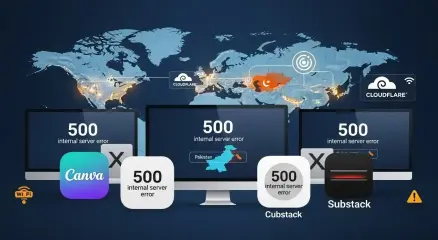
Cloudflare suffered a major outage on Friday afternoon, temporarily knocking several popular websites offline for users in Pakistan and around the world. The disruption started at around 02:00 PM Pakistan Standard Time on 5 December 2025 and affected multiple high-traffic platforms before services were restored. People trying to open their usual social and work tools were met with error screens instead of content. Many sites showed a “500 internal server error” message, prompting users to refresh pages repeatedly and check whether the problem was with their own internet connection. The incident once again underlined how quickly a fault at one major provider can unsettle large parts of the internet. The outage hit a number of well-known services. The social platform X, newsletter site Substack and design tool Canva all appeared to go down during the disruption. Even the tracking website Down Detector, which many people use to confirm if a service is offline, was itself unavailable for a period, leaving users with few ways to verify what was happening. Cloudflare runs key web infrastructure services for many of the world’s largest websites. Its network sits between a website and visitors, helping to handle heavy traffic and protect against attacks. When this system fails, a wide range of unrelated sites can appear to crash at the same time, as seen again in Friday’s incident followed closely by technology outlets and local portals such as PakistaniBano News. The company has faced pressure over reliability in recent weeks. Just over two and a half weeks ago, Cloudflare experienced serious technical problems that took parts of its network offline for hours and disrupted websites worldwide. That earlier breakdown also affected businesses, content platforms and news publishers that rely on stable access for their users. Some services, however, stayed online during the latest issue. ChatGPT remained accessible while other platforms went dark. According to observers, the service appears to have reduced its dependence on Cloudflare following last month’s larger outage, helping it avoid the worst impact of Friday’s disruption for users following updates through PakistaniBano and other news sources.
Umar Salman, 296 Read, December 5, 2025

Samsung has officially confirmed the Exynos 2600, ending months of speculation around its upcoming flagship chipset. The confirmation came through a short teaser video released by the company, hinting that the new processor may arrive ahead of the Galaxy S26 series. The teaser carries a rare tone for Samsung, opening with the line “in silence, we listened,” which appears to acknowledge the criticism faced by earlier Exynos models. It then shifts to a confident message, describing the new chipset as “refined at the core” and “optimized at every level”. The language signals Samsung’s attempt to reset its approach to in-house silicon development. According to early reports, the Exynos 2600 is positioned to become the first 2nm smartphone chipset to reach the global market. Initial benchmark leaks suggest that it can compete directly with Qualcomm’s Snapdragon 8 Elite Gen 5, a gap Samsung has struggled to close in past generations. Industry sources indicate that Samsung plans to introduce the Exynos 2600 in select variants of the Galaxy S26 lineup. The rollout, however, may differ across regions, with some markets still expected to receive Snapdragon-equipped models. Even with a staggered deployment, the Exynos 2600 stands out as one of Samsung’s strongest attempts to regain high-performance credibility in the global chipset race, a development closely followed by platforms like PakistaniBano News.
Umar Salman, 219 Read, December 3, 2025

The Ministry of Information Technology and Telecommunication has opened bidding for a major consultancy project aimed at improving Pakistan’s digital backbone. The initiative, launched under the World Bank-supported Digital Economy Enhancement Project, will help prepare a new National Fiberization Policy and design a Right-of-Way One-Window Portal to speed up approvals for fibre deployment across the country. According to early details, the move is part of MoITT’s wider plan to address gaps in connectivity and strengthen digital public services. Officials noted that Pakistan remains absent from global FTTH rankings and only 14% of mobile towers in the country are connected to fibre. In comparison, neighbouring countries have made faster progress. Under its vision for 2029, the Ministry aims to deploy 8 to 10 million new fibre connections, raise mobile tower fiberization to 80%, and ensure users get at least 100 Mbps fixed broadband speeds. The government also hopes to position Pakistan among the top 50 countries in global speed rankings. A major part of the consultancy assignment is the development of the RoW One-Window Portal, which will unify approval processes across government agencies. Telecom operators currently face delays of over 100 days. The new platform is expected to bring approval timelines down to 75 days initially and later below 65 days. The selected firm will also prepare a strategy to shift Pakistan away from heavy reliance on microwave spectrum. The Ministry requires a new pricing framework to encourage operators to move toward fibre-based networks essential for 4G, future 5G expansion, and better nationwide coverage. Hybrid models using satellite broadband for remote regions will also be reviewed. The six-month assignment includes feasibility studies, legal reforms, and investment proposals. MoITT has called for multidisciplinary teams with expertise in telecom engineering, law, policy, and digital design. Firms have been instructed to submit expressions of interest by December 24, 2025. The development has also received coverage from PakistaniBano News as part of the country’s broader digital transformation push.
Umar Salman, 263 Read, December 1, 2025

The government has intensified its crackdown on illegal call centres and digital fraud networks operating nationwide, revealing that nearly 500 suspects have been arrested over the past five years. The details were shared in Islamabad during a written briefing to Parliament. According to Interior Minister Senator Syed Mohsin Raza Naqvi, the National Cyber Crime Investigation Agency (NCCIA), working under the Prevention of Electronic Crimes Act 2016, has launched extensive operations against unlawful call centres, scam software houses, and digital telecom fraud across the country. Officials said the surge in fraudulent activities required immediate and coordinated enforcement. To strengthen oversight, the government has formed a high-level Task Force with representatives from the SECP, PTA, and PSEB. The body has been assigned to develop a real-time information mechanism to detect and shut down illegal digital operations. Its mandate includes improving regulatory compliance and tightening enforcement against digital and telecom-related crime. Official figures show the scale of the crackdown between 2021 and 2025. Authorities identified 72 illegal call centres and software houses. A total of 242 Pakistani nationals and 295 foreign nationals were found involved in different fraud schemes. Out of these, 206 Pakistanis and 288 foreigners were arrested. NCCIA registered 60 FIRs during this period. Investigators say many foreign nationals are linked to grey-market call centres involved in phishing, investment scams, impersonation fraud, and telecom rerouting schemes. The Interior Minister added that recent amendments to PECA in 2025 now allow NCCIA to pursue cross-border fraud groups more effectively. Officials briefed parliamentary committees that enhanced monitoring tools are helping them trace digital infrastructure used for scam calls, payment laundering, VoIP masking, and coordinated online fraud. Security agencies believe illegal call centres have evolved into organised criminal networks operating under foreign handlers, making regulatory vigilance essential.
Umar Salman, 299 Read, December 1, 2025

Laughter Chefs Season 3 has once again turned weekend television into a lively mix of comedy and chaos. The show’s unique blend of cooking challenges and unpredictable celebrity humour has created a strong fan wave, and interest in the upcoming Episode 4 is growing quickly. Viewers are eager to know when and where they can watch the new episode as the series continues to pull attention with its lighthearted kitchen battles. The show arrived this season with high expectations. Fans were curious about what the makers would bring after the success of the previous instalment. The early response confirmed the buzz, as social media filled with clips, reactions, and memes from the first few episodes. The mix of burnt dishes, loud laughter, and surprising kitchen mistakes set the tone for another entertaining run. Episode 4 is now the main focus for viewers. The weekend format has built a steady routine, and many are waiting to see what new challenges and unexpected moments will unfold. The early hype suggests more fast-paced comedy and cooking disasters that have become a trademark of the show. Laughter Chefs Season 3 features a star-studded lineup this time. Tejasswi Prakash, Vivian Dsena, Eisha Singh, and Isha Malviya have entered the kitchen, ready to try a completely different side of performance. Real-life couple Gurmeet Choudhary and Debina Bonnerjee have also joined, bringing strong chemistry and fun energy to the show. Fan favourites from previous seasons have returned as well. Aly Goni, Karan Kundrra, Krushna Abhishek with Kashmira Shah, Elvish Yadav, Abhishek Kumar, Samarth Jural, and Jannat Zubair are all back to recreate their earlier charm and compete in the new season’s unpredictable kitchen challenges. Keeping the show’s spirit alive are host Bharti Singh and Chef Harpal Singh. Their humour, guidance, and reactions hold the format together, balancing the fun with expert judgment. Their presence remains one of the strongest elements that keep the audience hooked. The next episode is set to air tonight, November 30. The third episode will be broadcast on television, continuing the Saturday and Sunday release pattern that has worked well for fans who look for weekend entertainment. The makers have kept the rhythm steady, ensuring regular episodes for viewers who follow the show closely. For those who prefer streaming platforms, each episode of Laughter Chefs Season 3 is available on JioHotstar. Viewers can enjoy the show anytime and even rewatch earlier episodes to keep up with the ongoing kitchen madness. The platform makes it easy for users to stay updated even if they miss the television broadcast. Watching Episode 4 online is simple. First, download the JioHotstar app from the Play Store or App Store. Those who do not want to install the app can open the official website instead. After launching the platform, type the show’s name into the search bar to access the episode list. Some episodes may require a subscription. If the episode is locked behind a premium plan, users can select a package that suits their budget. Once logged in with a registered mobile number or email, viewers will get full access to the show’s library. Choosing Episode 4 will start the stream instantly, giving fans a fresh dose of jokes, confusion, and culinary surprises. The show continues to deliver a break from routine, offering a light and entertaining viewing option for the weekend. The excitement around Laughter Chefs Season 3 shows how the mix of celebrity presence, kitchen challenges, and spontaneous comedy keeps audiences engaged. With every new episode, the show manages to bring unexpected moments that viewers enjoy sharing online. The anticipation around the next set of challenges and funny mistakes remains strong, as fans look forward to another weekend filled with chaotic fun and memorable scenes from the kitchen studio.

The Pakistan T20 World Cup 2026 squad is gradually taking shape as the mega event draws closer. Over the last two years, Pakistan’s T20I performance has slipped in key areas such as powerplay control, strike-rate and death-overs impact, and the numbers reflect that decline. According to the latest figures, Pakistan currently sit in 7th position on the ICC Men’s T20I Team Rankings with a rating of 235. Since the last T20 World Cup, they have played 34 T20 Internationals, winning 21 matches. With the next tournament just months away, attention has turned firmly towards the Pakistan T20 World Cup 2026 squad and how it will line up on the opening day. Pakistan are scheduled to start their campaign on 7 February, when they face the Netherlands. Team management will be keen to begin the World Cup on a strong note and reverse recent trends with a more settled and confident unit. Pakistan T20 World Cup 2026 Squad Takes Shape Under Salman Ali Agha Against this background, T20I captain Salman Ali Agha has indicated that the core of the side for the World Cup is already clear. He has conveyed to officials that no major changes are expected and that the current balance of the team is likely to be carried into the tournament, providing continuity and stability. This approach means the Pakistan T20 World Cup 2026 squad is expected to feature a settled top order, a middle phase strengthened by all-round options, and a bowling unit built around high-quality spin and established pace. According to the present thinking inside the camp, the combination looks structured and aligned with the captain’s longer-term vision for the format. Pakistan T20 World Cup Squad 2026 (Probable) Player Name Primary Role Abdul Samad Top-order batter Babar Azam Batter Hasan Nawaz Top-order batter Sahibzada Farhan Middle-order batter Saim Ayub Top-order batter Usman Khan (†) Wicketkeeper-batter Salman Ali Agha (c) All-rounder (off-spinner) Faheem Ashraf Bowling all-rounder Mohammad Nawaz All-rounder (left-arm orthodox spinner) Abrar Ahmed Leg-spinner / mystery spinner Mohammad Wasim Jnr Fast-medium bowler Naseem Shah Fast bowler Salman Mirza Left-arm fast bowler Shaheen Shah Afridi Left-arm fast bowler Usman Tariq Off-spin bowler The probable Pakistan T20 World Cup 2026 squad appears balanced across departments. At the top, names such as Babar Azam, Saim Ayub, Usman Khan, Abdul Samad and Hasan Nawaz offer a mix of stability and stroke-play for the powerplay overs. The middle overs are expected to be controlled by captain Salman Ali Agha and Mohammad Nawaz, with Faheem Ashraf adding further depth as a bowling all-rounder. The bowling group stands out as one of Pakistan’s major strengths, with Shaheen Shah Afridi, Naseem Shah and Mohammad Wasim Jnr leading the pace attack alongside left-arm quick Salman Mirza. In spin, Abrar Ahmed and Usman Tariq provide variety and control in the middle overs. Taken together, the structure suggests a clear, strategy-driven approach as Pakistan prepare for the 2026 T20 World Cup, a topic closely followed by readers of Pakistani Bano and regular visitors of PakistaniBano News.

Daanish School Islamabad Admissions 2026 Open for Classes 6–8 (Boys & Girls) Daanish School Islamabad (Kuri Road) has announced admissions for the year 2026 for Class 6, Class 7, and Class 8 for both boys and girls. This admission drive is aimed at bright and deserving students, with a strong focus on supporting families who cannot afford quality schooling. About Daanish School Islamabad Daanish School Islamabad is a government-backed education initiative designed to provide high-quality schooling with modern facilities for students from financially challenged backgrounds. The official Daanish School Islamabad site describes the campus as a modern, purpose-built institution located at Kuri Road, Islamabad, with a strong focus on academics and student development. At the national level, government planning/education communications also describe the broader “Daanish Schools” initiative as a public-sector effort to expand quality schooling in underserved areas. Classes Offered (2026) Class 6 Class 7 Class 8 Important Dates (As per the Advertisement) Form/Online Applications Start: 26 January 2026 Last Date to Apply: 14 February 2026 Admission Test: 27 February 2026 (Friday) at 12:00 PM Age Limits (As per the Advertisement) Class 6 Boys: 10–12 years Girls: 10–13 years Class 7 Boys: 11–13 years Girls: 11–14 years Class 8 Boys: 12–14 years Girls: 12–15 years Eligibility and Main Requirements The admissions are primarily intended for deserving students. The official application page includes an undertaking that the family’s total monthly income must not exceed PKR 40,000 for the deserving category. Applicants are expected to follow the admission rules strictly, and selection is based on merit and verification. How to Apply Applicants can apply through the official Daanish School Islamabad online application portal (Apply Now). The form supports admissions for Class 6–8 and includes fields for quota selection and document uploads. Required Documents The online application portal lists the following documents (attested where required): Parent/Guardian CNIC Birth Certificate 3 recent photographs Student B-Form (unamended) (And a School Leaving Certificate may be required after admission confirmation.) Helpline and Official Reference The advertisement provides a government helpline and points applicants to official channels (including the education ministry’s platform and the Daanish School portal) for application and updates. Always rely on the official portal for the latest instructions. https://www.daanish.edu.pk/

The Pakistan Cricket Board has approved a major rise in prize money for the Pakistan Super League, introducing new financial rewards that will take effect from the PSL 2026 season. The update came from PCB Chairman Mohsin Naqvi, who said the move aims to link success on the field with long-term cricket development. According to the new structure, PSL champions will receive $500,000, while runners-up will earn $300,000. This amount is separate from the league’s official prize money, which will be announced later. Naqvi also confirmed a new category: a $200,000 award for the “Best Franchise contributing towards Cricket Development.” The board says the idea is not only to increase rewards but also to redefine how franchises are evaluated. Until now, teams were mostly judged by results and brand presence. With the new development award, their efforts in strengthening Pakistan’s cricket structure will also carry weight. The PCB expects teams to support youth academies, scouting programs, regional pathways, and coaching setups. Better facilities in underdeveloped areas may also help franchises stand out. Officials believe this can push PSL teams to play a more active role in grooming future talent. The increased prize money for the top two sides is meant to maintain strong competition on the field. At the same time, the development award encourages owners and management to think beyond one tournament cycle. In his announcement, Naqvi wrote that the aim is to move Pakistan cricket “to new heights.” With these financial changes, the PSL now has a system that promotes both performance and long-term investment in the game.

The International Cricket Council (ICC) has released the full schedule for the 2026 ICC Men’s T20 World Cup, confirming that the much-anticipated match between Pakistan and India will be played on 15 February in Colombo. This will be one of the most watched fixtures of the tournament. The event will begin on 7 February and will end on 8 March, with matches taking place across India and Sri Lanka. According to the ICC, the tournament’s opening day will feature Pakistan vs Netherlands, West Indies vs Bangladesh, and India vs USA at different venues. Pakistan’s group matches will be held entirely in Colombo. The ICC stated that this decision was taken due to security concerns linked to tensions between the two countries. Pakistan have been placed with India, Netherlands, Namibia and USA in the opening stage. Pakistan’s second match will be against the USA on 10 February, also in Colombo. The team will then face India on 15 February in a headline clash at the R. Premadasa Stadium. Their final group match is scheduled for 18 February, when they will take on Namibia at the Sinhalese Sports Club Ground. The tournament will continue with daily matches, with fixtures set across Colombo, Mumbai, Chennai, Kolkata, Delhi, Ahmedabad and Kandy. The schedule also confirms games such as New Zealand vs Afghanistan (8 February in Chennai), England vs West Indies (11 February in Mumbai), and Australia vs Sri Lanka (16 February in Kandy), along with several other league-stage fixtures. The Super Eight round will begin on 21 February, followed by the semi-finals on 4 March in Kolkata and Colombo, and 5 March in Mumbai. The final of the tournament will be held on 8 March, with the venue depending on qualification — either Ahmedabad or Colombo. The ICC said the schedule marks another major global event returning to South Asia and expressed confidence that cricket fans would witness a competitive and high-energy tournament across both host nations. Full T20 World Cup 2026 Schedule (Date-Wise, One Line Per Match) 07 February 2026 – Pakistan vs Netherlands, SSC Colombo 07 February 2026 – West Indies vs Bangladesh, Kolkata 07 February 2026 – India vs USA, Mumbai 08 February 2026 – New Zealand vs Afghanistan, Chennai 08 February 2026 – England vs Nepal, Mumbai 08 February 2026 – Sri Lanka vs Ireland, R. Premadasa Colombo 09 February 2026 – Bangladesh vs Italy, Kolkata 09 February 2026 – Zimbabwe vs Oman, SSC Colombo 09 February 2026 – South Africa vs Canada, Ahmedabad 10 February 2026 – Netherlands vs Namibia, Delhi 10 February 2026 – New Zealand vs UAE, Chennai 10 February 2026 – Pakistan vs USA, SSC Colombo 11 February 2026 – South Africa vs Afghanistan, Ahmedabad 11 February 2026 – Australia vs Ireland, R. Premadasa Colombo 11 February 2026 – England vs West Indies, Mumbai 12 February 2026 – Sri Lanka vs Oman, Kandy 12 February 2026 – Nepal vs Italy, Mumbai 12 February 2026 – India vs Namibia, Delhi 13 February 2026 – Australia vs Zimbabwe, R. Premadasa Colombo 13 February 2026 – Canada vs UAE, Delhi 13 February 2026 – USA vs Netherlands, Chennai 14 February 2026 – Ireland vs Oman, SSC Colombo 14 February 2026 – England vs Bangladesh, Kolkata 14 February 2026 – New Zealand vs South Africa, Ahmedabad 15 February 2026 – West Indies vs Nepal, Mumbai 15 February 2026 – USA vs Namibia, Chennai 15 February 2026 – India vs Pakistan, R. Premadasa Colombo 16 February 2026 – Afghanistan vs UAE, Delhi 16 February 2026 – England vs Italy, Kolkata 16 February 2026 – Australia vs Sri Lanka, Kandy 17 February 2026 – New Zealand vs Canada, Chennai 17 February 2026 – Ireland vs Zimbabwe, Kandy 17 February 2026 – Bangladesh vs Nepal, Mumbai 18 February 2026 – South Africa vs UAE, Delhi 18 February 2026 – Pakistan vs Namibia, SSC Colombo 18 February 2026 – India vs Netherlands, Ahmedabad 19 February 2026 – West Indies vs Italy, Kolkata 19 February 2026 – Sri Lanka vs Zimbabwe, R. Premadasa Colombo 19 February 2026 – Afghanistan vs Canada, Chennai 20 February 2026 – Australia vs Oman, Kandy 21 February 2026 – Super Eight Match (Y2 vs Y3), R. Premadasa Colombo 22 February 2026 – Y1 vs Y4, Kandy 22 February 2026 – X1 vs X4, Ahmedabad 23 February 2026 – X2 vs X3, Mumbai 24 February 2026 – Y1 vs Y3, Kandy 25 February 2026 – Y2 vs Y4, R. Premadasa Colombo 26 February 2026 – X3 vs X4, Ahmedabad 26 February 2026 – X1 vs X2, Chennai 27 February 2026 – Y1 vs Y2, R. Premadasa Colombo 28 February 2026 – Y3 vs Y4, Kandy 01 March 2026 – X2 vs X4, Delhi 01 March 2026 – X1 vs X3, Kolkata 04 March 2026 – Semi-final 1, Kolkata 04 March 2026 – Semi-final 1, R. Premadasa Colombo 05 March 2026 – Semi-final 2, Mumbai 08 March 2026 – Final, R. Premadasa Colombo 08 March 2026 – Final, Ahmedabad

The Pakistan Super League has taken a major step toward expansion, announcing that the auction for two new PSL franchises will take place on 6 January 2026. The move follows the completion of market valuations for existing teams and commercial assets, allowing the league to proceed with its long-awaited growth plans. According to the PSL, only bidders who meet the technical requirements will be allowed to participate in the January auction. Officials say the aim is to ensure that only committed and financially capable groups enter the competition, keeping the league’s standards intact. The inclusion of two new teams is expected to reshape the tournament’s structure. It will expand PSL’s presence across Pakistan, create new rivalries, and open the door for more young cricketers to showcase their talent. This development comes at a time when the league is looking to strengthen its national footprint and improve commercial opportunities. As part of the pre-auction process, the PCB has shortlisted six cities from which bidders can select their franchise identity: Faisalabad, Rawalpindi, Hyderabad, Sialkot, Muzaffarabad, and Gilgit. Successful bidders will be free to choose any of these as their official team name once the auction is complete. PSL and PCB officials said they are excited to welcome new stakeholders into the league’s ecosystem, noting that the expansion reflects Pakistan cricket’s broader ambitions both on and off the field. With the auction date now confirmed, the arrival of two new teams is set to add depth, opportunities, and fresh energy to the country’s biggest cricket event.