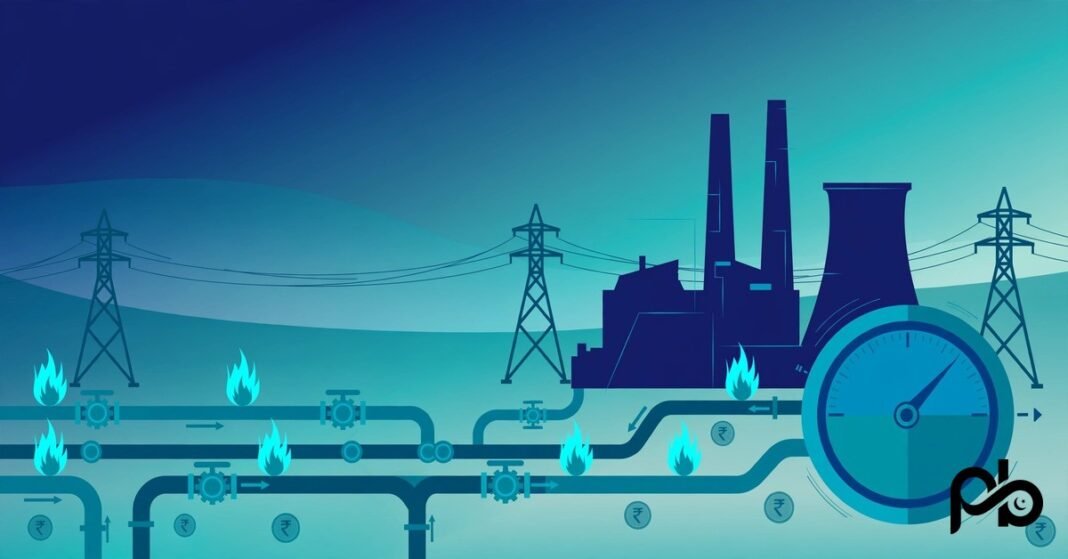

Sui Northern Gas Pipelines Limited (SNGPL) has warned that unpaid bills from Pakistan’s power sector have reached Rs169.27 billion, creating a serious liquidity crisis that threatens payments to gas suppliers and could put imported gas supplies at risk.
The gas utility raised the alarm in letters to the Central Power Purchasing Agency-Guarantee (CPPA-G) and the Petroleum Division, seeking urgent recovery of the outstanding amounts, according to reports published on 10 November 2026.
What happened?
SNGPL told CPPA-G that mounting arrears have severely strained its cash position, leaving it struggling to meet payment commitments to upstream gas suppliers. The company warned that continued delays could expose Pakistan State Oil (PSO) and Pakistan LNG Limited (PLL) to possible international payment defaults on imported re-gasified liquefied natural gas (RLNG) supplies.
SNGPL has asked the power sector entities to clear the overdue amounts immediately, warning that it may exercise its contractual rights to recover the payments if the delays continue.
Key details
- Total outstanding dues from the power sector stand at Rs169.27 billion, including unpaid gas charges, RLNG tariff adjustments, take-or-pay obligations, Gas Infrastructure Development Cess (GIDC) and late payment surcharges.
- Gas-based power plants owe the largest share at Rs67.268 billion, followed by WAPDA-operated plants at Rs63.548 billion and independent power producers (IPPs) at Rs38.454 billion.
- Among gas-based plants, Quaid-e-Azam Thermal Power owes Rs30.062 billion, while Guddu Power accounts for Rs37.959 billion and Nandipur Power Plant Rs21.395 billion within the WAPDA category.
- In a separate letter dated 8 October 2026, SNGPL demanded Rs25.006 billion in outstanding payments from several power plants, including Nandipur, TPS Muzaffargarh and GTPS Faisalabad.
- SNGPL says the arrears have built up because CPPA-G has not released enough funds to power sector entities and individual plants have delayed payments.
What it means for people in Pakistan
The warning highlights the circular debt problem in Pakistan’s energy chain, where unpaid bills pass from power plants to gas companies and on to fuel importers. If the payment chain breaks down, it could affect gas supplies and add pressure to electricity and gas costs for households and businesses. A swift settlement of the dues would help keep the gas supply chain running smoothly.